
Gene Stacking – Improved Trait Introduction in Local Cultivars
Theory
What is Gene Stacking?
Gene stacking refers to the process of introducing multiple genes into a plant to express several desirable traits simultaneously. It involves introducing multiple transgenes (genes transferred from one organism to another) into a plant, creating a "stacked" or "pyramided" trait [1]. Hence, it is also known as gene pyramiding. It can be done via conventional breeding, genetic engineering, or newer techniques like CRISPR/Cas9. The combined traits resulting from this process are called stacked traits. A biotech crop variety that bears stacked traits is called a biotech stack or simply stack. An example of a stack is a plant transformed with two or more genes that code for Bacillus thuringiensis (Bt) proteins having different modes of action. It is a hybrid plant expressing both insect resistance and herbicide tolerance genes derived from two parent plants [1]. In general, the choice of the best method varies according to the species of interest and the availability of genetic constructions and pre-existing transgenic events. Commonly used to combine traits such as disease resistance, drought tolerance, pest resistance, and nutritional enhancement. In the earlier days, gene stacking was done by the conventional method of plant crossing (plant breeding). Two plant lines having a different beneficial phenotype/trait were crossed with each other to bring both the traits in a single plant line.
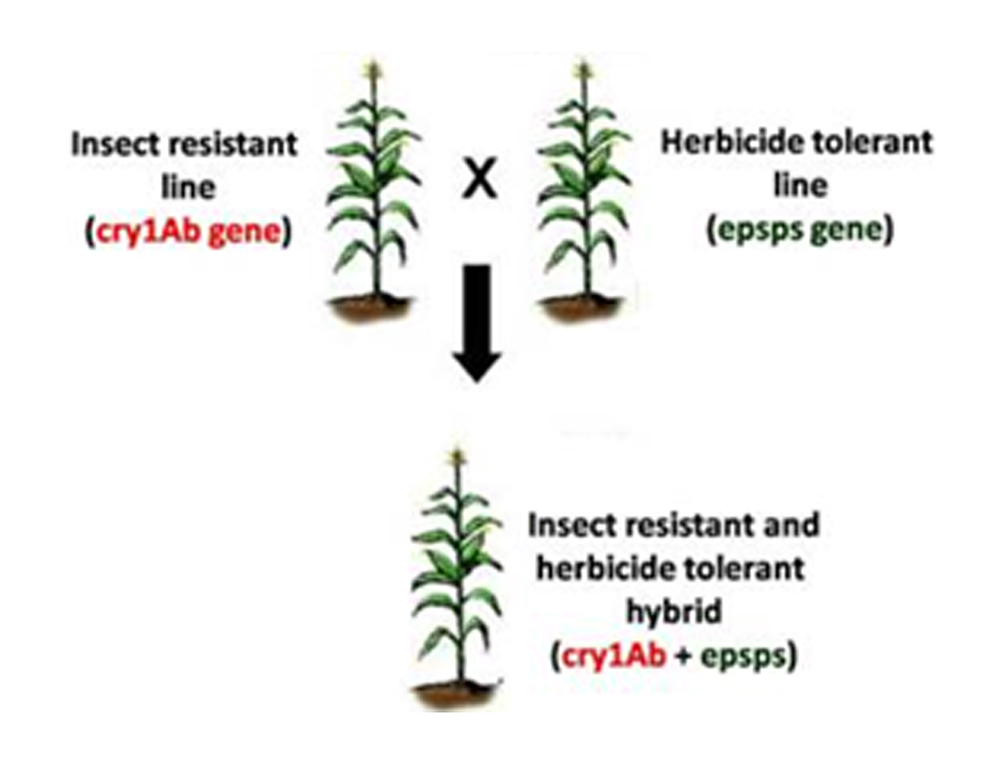
Figure 1: Gene stacking by plant breeding. Source: [1]
Importance in Local Cultivars
- Helps enhance local varieties without replacing them, preserving regional adaptation and farmer familiarity.
- Addresses region-specific challenges like local pests, soil salinity, or climate conditions.
- Makes local crops more competitive and sustainable, reducing the need for external inputs like pesticides.
Examples of Stacked Traits
Bt + herbicide tolerance in crops: Biotech crops designed for insect resistance, herbicide tolerance, or both (stacked characteristics) encompass the majority of the approximately 181.5 million hectares of agricultural land utilized by genetically altered plants globally. The primary strategies for developing herbicide-tolerant plants through genetic engineering involve the introduction of genes that encode enzymes, such as glyphosate N-acetyltransferase (gat) and glyphosate oxidase (gox), which degrade the herbicide into non-toxic compounds, or the modification of plant genes that encode biochemical targets of the herbicide, such as 5-enolpyruvylshikimate-3-phosphate synthase (EPSPS) and aromatic amino acid (aroA). Insect resistance in transgenic plants is typically achieved by incorporating Bacillus thuringiensis (Bt) toxin genes from the soil bacterium B. thuringiensis, which encode crystal poisons (Cry proteins). Cry proteins are solubilized in the insect midgut, where intestinal proteases digest the resulting protoxins and cleave the C or N terminus. The activated toxins identify binding sites on the midgut brush border membrane and create ion channels or pores in the epithelial membrane, resulting in cell lysis and ultimately death [2].
Drought + salinity tolerance in rice: Traditional crop breeding methods are insufficient for developing drought stress resistance in agricultural plants. Transgenic technology has enabled successful incremental enhancements in drought and salinity tolerance through the modification of genes in many crop species. Drought, as a polygenic characteristic, indicates that prospective candidate genes for gene stacking include those involved in cellular detoxification, osmolyte build-up, antioxidant systems, and signalling pathways. Given that cellular dehydration is intrinsic to salt stress, the modification of these genes enhances tolerance to both salinity and drought in most instances. Plants produce cytotoxic methylglyoxal in response to abiotic stress like salinity and drought. Cells produce ROS from methylglyoxal, a glycolysis byproduct. The glyoxalase pathway detoxifies methylglyoxal with two enzymes, GLY I and GLY II. First, tobacco was used to pyramid the two metabolic pathway genes, then rice. GlyI and GlyII genes were cloned from Brassica juncea and Oryza sativa into plant transformation vectors under the 35S cauliflower mosaic virus (CaMV) promoter. This construct became tobacco by Agrobacterium-mediated transformation. The technique produced single and double-transgenic plants. Transgenic plants overexpressing both Gly genes showed a synergistic impact for stronger stress tolerance than those overexpressing either gene alone. Rice adopted this method after tobacco's proof of concept. Engineering the glyoxalase pathway in high-yielding rice IR64 was attempted. The 35S CaMV promoter was used to clone the Brassica juncea and Oryza sativa GlyI and GlyII genes into pCAMBIA1304 vector. The construct was converted into rice by Agrobacterium, and overexpression lines were created. Even under nonstress settings, transgenic plants had higher GlyI and GlyII protein levels and lower methylglyoxal levels than wild-type plants, confirming that both transgenes were stable and functional. Surprisingly, 80% of transgenic seeds germinated at 200 mM NaCl and maintained greenness during the vegetative stage. Under salinity stress, double transgenic plants overexpressing GlyI and GlyII genes retained 70% chlorophyll and had less chloroplast damage. Transgenic plants have considerably reduced ROS accumulation than WT under salinity [3].
Also based on requirements, genes responsible beneficial phenotypes/traits can be stacked into potentially important food crops to enhance their nutritional value, stress tolerance, and their ability to tackle harsh environmental factors.
Evolution of gene stacking:
Traditional Methods:
- Early approaches relied on conventional breeding and basic transgenic techniques.
- Incorporating multiple traits was slow and required extensive crossbreeding.
Genetic Engineering Advances:
- Introduction of recombinant DNA technology allowed integration of several genes into one plant genome.
- Site-specific recombination systems (e.g., Cre-lox, FLP-FRT) increased the accuracy and stability of gene insertion.
Modern Genome Editing:
- Breakthroughs like CRISPR/Cas systems enabled precise and efficient modification of multiple genes at once.
- These tools minimized off-target effects and eased regulatory challenges.
Synthetic Biology and Modular Cloning:
- New methods allow for the construction of complex gene stacks tailored to specific agricultural needs.
Impact on Agriculture:
- Gene stacking now enables the development of crops with:
- Enhanced pest and disease resistance
- Improved stress tolerance
- Better nutritional content
- Reduced reliance on chemical inputs
- Gene stacking now enables the development of crops with:
Supports more sustainable and resilient agricultural systems.
Techniques for gene stacking:
Gene stacking can help increase the quantitative or qualitative traits in plants especially when the trait involves expression of multiple genes. Further, this can help in introducing diverse qualitative traits e.g., colour and leaf shape, smooth or wrinkled seed coat, flower colour, etc or diverse quantitative traits e.g., increase grain number as well as increase leaf number, higher growth rate in plants, enhanced flowering and seed production, etc.
Molecular marker-assisted selection (MAS) for precision breeding: This study reports a successful pyramidization of genes/QTLs to confer resistance/tolerance to blast (Pi2, Pi9), gall midge (Gm1, Gm4), submergence (Sub1), and salinity (Saltol) in a released rice variety CRMAS2621-7-1 as Improved Lalat. This rice variety had already been incorporated with three BB resistance genes, xa5, xa13, and Xa21, to supplement the Xa4 gene found in Improved Lalat. This was accomplished through the use of the marker assisted selection (MAS) technique. All of the markers linked to the target attributes showed definite variation between the donor and recipient parents, according to the molecular study. Until the BC3F1 generation, the traditional backcross breeding method was used. From BC1F1 onward, marker assisted selection was used at every stage to track the transmission of the desired alleles using molecular markers. To create hybrids with all ten stress resistance/tolerance genes/QTLs in a single plant/line, the several BC3F1s with the target genes/QTLs were intercrossed. It was possible to recover homozygous plants for resistance/tolerance genes in various combinations. Promising offspring lines were chosen after the BC3F3 lines were evaluated for their agronomic and qualitative characteristics. Background selection was done using SSR. In SSR-based background selection as well as morphological and grain quality parameters, the majority of the gene pyramid lines exhibited a high degree of resemblance to the recurrent parent. Two lines possessed all ten resistance/tolerance genes and demonstrated sufficient levels of resistance/tolerance against the five target stresses out of all the gene pyramids that were tested. The study shows how MAS may stack many genes into a single line while maintaining a high level of parental genome recovery [4].
Transgenic stacking via transformation events: Transgenes can be stacked into plants via transformation events. Agrobacterium tumefaciens carrying Dm-AMP1, a linker peptide of the I. balsamina antimicrobial peptides (Ib-AMP), and Rs-AFP2 on a single plasmid, pFAJ3105, was used by Jha and Chattoo [5] to transform rice. Compared to plants that were transformed singly, the transformed plants that co-expressed the transgenes Rs-AFP2 and Dm-AMP1 exhibited greater resistance to fungal infections.
Even when transgenes are physically connected, uncoordinated expression is thought to be a significant barrier to their co-expression. Silencing of the transgenes may also result from many copies of the transgenes in the transgenic plants' genome. Gene sequences for various proteins can be cloned into a single open reading frame utilizing the short linkers to get around these restrictions. When the linker peptides pass through the endomembrane system, the host cell's proteinase then cleaves them into protein units. Two antimicrobial proteins, Rs-AFP2 and Dm-AMP1, connected by the 16 amino acid Ib-AMP linker peptide, were isolated from Impatiens balsamina seeds to create a gene construct by Jha and Chatto. Agrobacterium-mediated transformation was used to create transgenic rice with single-protein genes and cleavable chimeric polyprotein gene constructs. Compared to the wild-type rice, the transgenic rice was found to have greater resistance to the Rhizoctonia bacterium (79% higher) and the rice blast fungus 90% higher [5, 6].
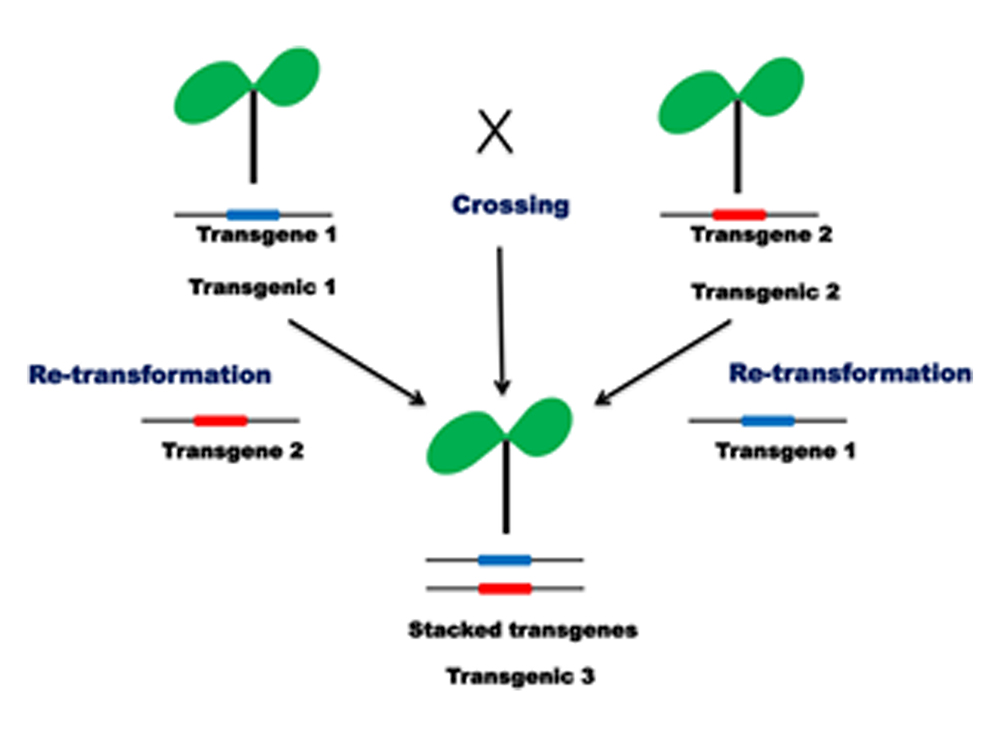
Figure 2: Diagrammatic representation of crossing and re-transformation-based strategy for gene stacking in plants. Source: [https://www.researchgate.net/figure/Diagrammatic-representation-of-crossing-and-re-transformation-based-strategy-for-gene_fig2_363552368](https://www.researchgate.net/figure/Diagrammatic-representation-of-crossing-and-re-transformation-based-strategy-for-gene_fig2_363552368)
- Gene stacking using CRISPR/Cas9 technology:
The newest and maybe most straightforward gene editing technology is the CRISPR/Cas9 system, which consists of just two parts: a Cas9 endonuclease protein and a tiny guide RNA molecule (sgRNA). These two parts work together to identify and cleave a particular 20 bp target location in a genome. Complementary base pairing between the sgRNA and target site sequence determines target specificity, making it easy to design highly specific, targeted mutations. CRISPR is the latest technology available for gene editing, and multiple genes can be edited simultaneously. CRISPR/Cas9 can modify numerous genes at once in plants. Three loci in maize—lig1, ms26, and ms45—were successfully targeted in the same cells without showing any signs of multiplexing lowering editing efficiency. All three genes were successfully mutated to create stable transgenics [7].
In rice, two genes were targeted using distinct sgRNAs, and the double mutation frequency in T0 plants (5–28%) was about equivalent to the product of the mutation frequencies at each target location. This was illustrated for four distinct pairs of genes [8].
In Arabidopsis, three genes associated with trichome development were targeted by two sgRNAs, resulting in mutant phenotypes in the T1 generation that were compatible with biallelic double and triple mutations, which were inherited and validated in the T2 generation [9]. In Arabidopsis, six genes were concurrently targeted using six sgRNAs, resulting in plants that exhibited mutations at multiple loci, with one plant displaying alterations at all six target loci [10]. Various genes that are responsible for plant senescence (ageing), especially the positive regulators (e.g. PIF and NAC family of genes) of it can be knocked out by CRISPR/Cas9 editing can result in delayed plant scenescence (ageing) thereby increasing the plant lifespan and increased productivity. Different knockout plant lines can now be bred together to get a new plant line with all the gene knockouts in a single line.
All the CRIPSR edited plant lines can now be brought into a single plant by breeding and transformation methods.
Few basic tools/techniques required for the experiments of gene stacking:
PCR: The Polymerase Chain Reaction (PCR)
PCR: The Polymerase Chain Reaction (PCR) is a widely used molecular biology technique for in vitro amplification of specific DNA sequences.
- It can generate millions to billions of DNA copies from a minimal initial amount.
- Essential components required for PCR include:
- DNA template
- Two sequence-specific primers
- Deoxynucleotide triphosphates (dNTPs)
- Buffer containing Mg²⁺ ions
- Thermostable DNA polymerase (e.g., Taq polymerase)
- The PCR process involves repeating cycles with three main steps:
- Denaturation (≈94–95 °C): Double-stranded DNA dissociates into single strands.
- Annealing (≈50–65 °C): Primers bind to their complementary target sequences.
- Extension (≈72 °C): DNA polymerase synthesizes new DNA strands.
- Each cycle exponentially amplifies the target DNA region.
- PCR enables rapid and precise DNA analysis.
- Key applications of PCR include:
- Gene cloning
- Mutation detection
- Pathogen identification
- Molecular confirmation of transgenic plants and organisms
- Advanced methods such as real-time PCR and reverse-transcription PCR
Restriction digestion and ligation:
Restriction digestion and ligation are essential in recombinant DNA technology for cleaving and linking DNA segments.
- Restriction endonucleases target specific palindromic DNA sequences to create sticky or blunt ends.
- Both the target DNA fragment and vector (e.g., plasmid) are cleaved with the same enzyme to ensure compatible ends.
- Ligation, facilitated by DNA ligase, forms phosphodiester linkages between nucleotides, connecting the insert to the vector.
- The reaction requires ATP (or NAD⁺ in some systems) and appropriate buffering conditions.
- These processes enable the assembly of recombinant DNA for cloning, expression, and genetic manipulation research.
Agarose gel electrophoresis:
Agarose gel electrophoresis is a technique used for separating and visualizing nucleic acids like DNA and RNA based on size.
- Nucleic acid samples are loaded into wells of a porous agarose gel and an electric field is applied, promoting migration towards the positive electrode.
- Smaller nucleic acid fragments migrate faster and travel farther in the gel compared to larger fragments, allowing for size-based separation.
- Gel concentration affects the resolution of separation, and a DNA ladder serves as a size reference.
- Post-electrophoresis, nucleic acids are stained with intercalating dyes (like ethidium bromide or safer alternatives) and visualized under UV or blue light to assess fragment size, integrity, and purity.
Western Blot:
Western blotting is used to identify and quantify specific proteins in complex biological samples based on their molecular weight and antigen-antibody specificity.
- Protein Denaturation: Proteins are first denatured to ensure they are in a linear form.
- Separation by SDS-PAGE: Denatured proteins are separated using SDS–polyacrylamide gel electrophoresis (SDS-PAGE). SDS imparts a uniform negative charge to the proteins, allowing their separation based on size.
- Transfer to Membrane: The separated proteins are transferred (blotted) onto a nitrocellulose or PVDF membrane, preserving the separation pattern.
- Blocking: The membrane is treated to block nonspecific binding sites to prevent unwanted antibody interactions.
- Primary Antibody Incubation: The membrane is incubated with a primary antibody that specifically binds to the target protein.
- Secondary Antibody Incubation: A labelled secondary antibody is added to bind to the primary antibody, amplifying the detection signal.
- Detection: The target protein is visualized using colorimetric, chemiluminescent, or fluorescent detection methods.
- Analysis: The technique allows sensitive and specific visualization of the target protein, providing information about its expression level and molecular size.
Advantages
- Increases yield stability and agronomic performance.
- Reduces chemical use and enhances eco-friendliness.
- Preserves genetic diversity by improving rather than replacing traditional varieties.
- Provides holistic solutions to multiple agronomic issues in one crop.
- Delay in insect resistance, disease resistance, promise of greater food and nutritional security
Challenges
- Regulatory and biosafety concerns with stacked GM crops.
- Gene silencing or interactions between stacked traits.
- High development costs and technical complexity.
- Need for field validation under diverse local conditions.
- Conventional vector systems may not be adequate
- Multiple gene effects need not always have a multiplier or effective reduction effect
- Using more selectable marker systems would be arduous for tracking gene expression
- Gene overload effects could be possible